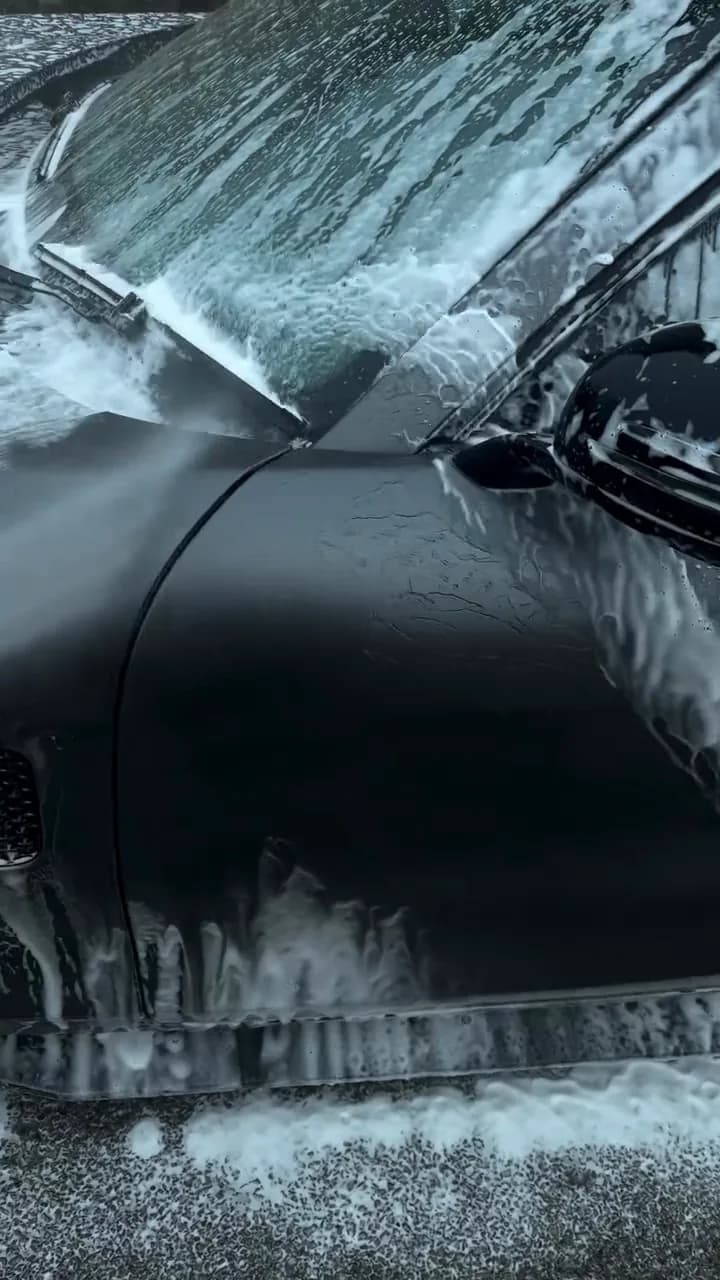
Washing a ceramic coated car is straightforward: rinse off loose grit first, use clean and separate tools, wash with a gentle car shampoo, rinse thoroughly and dry without dragging dirt across the paint.
The coating makes this easier, but technique still matters. A coating can still be scratched, contaminated and water-spotted. Where the person who applied your coating gives you specific instructions, follow those over the general guidance here.
Before The First Wash
Ask when the coating can get wet, be driven normally and be washed. Curing needs vary by product and conditions, so there is no universal waiting period. If Kamran applied your CQuartz coating, ask him before he leaves.
If bird droppings or another harsh contaminant lands on the paint while the coating is still curing, ask for product-specific advice rather than leaving it there.
What You Need
- A hose, or a pressure washer used gently
- A pre-wash product for heavier grime
- A pH-neutral car shampoo
- Clean wash mitts
- Separate wheel brushes and mitts
- Two buckets, or a rinseless wash for light dirt
- Soft, clean drying towels
- A drying aid, if it is compatible with the coating
There is more than one safe method. Clean tools and compatible products matter more than any particular gadget or the number of buckets.
Step 1: Pick Your Moment
Work on cool panels, out of direct sun where you can. Heat and wind dry water and shampoo too quickly. On a blustery Wellington day, a sheltered spot such as a garage or the lee of the house makes a real difference.
If the car is too hot, move it or wait, rather than racing the sun to rinse before the shampoo dries.
Step 2: Clean The Wheels First
Wheels carry brake dust and road grime that should never reach the paint. Use separate brushes and a cleaner suited to the wheel finish, and do not let it dry on. Strong acidic or alkaline cleaners have their place in professional decontamination, but do not assume they are safe on every finish.
Step 3: Rinse Off The Loose Dirt
Rinse off as much loose dirt as you can before touching the paint, especially from the lower panels, the arches and the grille. If the car lives near the harbour or the south coast, a good rinse also takes the salt off before you start.
A pre-wash product can loosen traffic film first, but thick foam on its own does not prove it is cleaning.
Step 4: A Careful Contact Wash
Wash in small sections from the top down with light pressure, moving dirt away rather than rubbing it round, and rinse the mitt often. Use a separate mitt for the dirtier lower panels. If a spot will not shift, leave it for a targeted treatment rather than pressing harder.
Step 5: Rinse Thoroughly
Flush shampoo out of seams, mirrors, badges and trims. Do not judge the coating while there is still film or residue on it. Some coatings bead tightly and others sheet water away; both can be healthy.
Step 6: Dry Safely
Never leave water to evaporate on the paint. Dry with clean, soft towels and light contact; a compatible drying aid can reduce the friction. And never wipe a dusty or rain-spotted car dry: wash it first.
How Often Should You Wash It?
When it is genuinely dirty, often every one to three weeks for a daily driver. Deal with bird droppings, bugs and sap sooner. A garaged weekend car needs far less than one parked outside near the coast, so look at the car rather than the calendar.
What If The Beading Has Faded?
Start with a thorough wash. Traffic film and mineral deposits often mask a coating that is still there. If it still behaves unevenly, bonded contamination may need a compatible decontamination. Avoid aggressive clay or polishing without advice: clay can mar the surface, and polishing can remove the coating.
Products And Habits To Avoid
- Automatic brush car washes
- Household detergent or dishwashing liquid
- Dropped or dirty towels
- Wiping dust off dry paint
- Abrasive polish used as a cleaner
- Waxes or sealants over the coating unless they are compatible
- Strong chemicals left to dry on the paint
- Scrubbing at bugs or bird droppings
- Letting hard water dry on the paint
Touchless car washes are a compromise: no brushes, but they can use strong chemicals and leave traffic film behind.
Do You Need A Topper?
Only if it is compatible with your coating and actually useful. Toppers can refresh slickness and water behaviour, but they can also mask how the coating itself is performing. More product is not automatically better.
When To Get Help
Ask for help if the paint still feels rough after washing, water spots will not shift, panels behave unevenly, scratches need attention, or the car has been hit by overspray or harsh chemicals.
A full detail at your doorstep is an easy way to reset a coated car properly, without the car going anywhere.
Make Safe Washing Repeatable
A routine you keep up beats a perfect one you skip. Rinse first, keep the tools clean and separate, dry carefully and deal with harsh contamination early, and the coating will keep doing its job.